












Solar Smash
 Safety


Editor's Review
People often write Solar Smash off as a shallow toy, which misunderstands a fundamental fact: its graphics are not ornaments; they are the gameplay itself. Whereas in other games, the visuals support systems of combat, exploration, or storytelling, Solar Smash flips this around. The simulation's real-time destruction physics, particle effects, and rendering of planets make up the entirety.
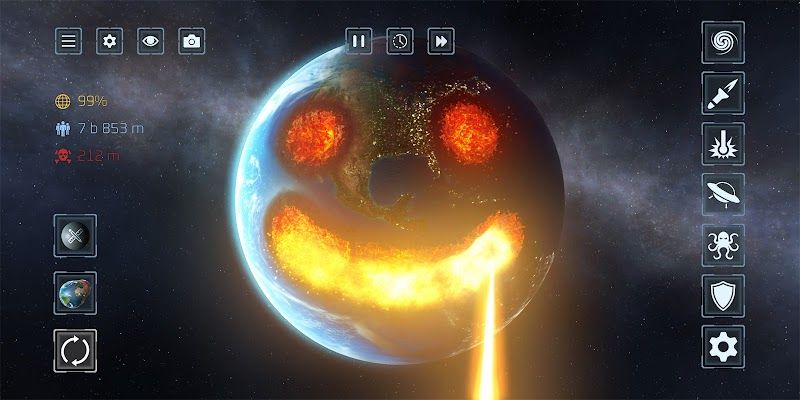
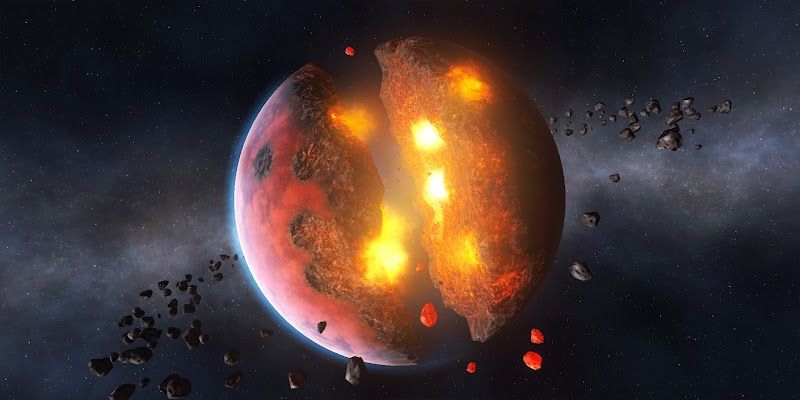
It starts with the refinement of the planetary models themselves. In Planet Smash mode, all the celestial objects are completely modeled in surface textures, atmospheric smokes, and extensive geographical effects that dynamically respond to the destruction. Launch a volley of nuclear missiles on the planet and the hits do not just cause reaction effects of generic explosions. Rather, craters are created at the specific strike points, continents fracture along the visible tectonic faults, the oceans turn to clouds of steam and magma bubbles through cracks as the crust fractures. The planet is still spinning around, and thus the destruction has to occur on each section of the surface, as opposed to being confined to one spot. Point a laser at the north side and turn the camera upside down and you will see matching exit wounds on the other end, as long as the beam went deep enough. It's this level of responsive detail that turns each weapons strike into a miniature physics experiment.
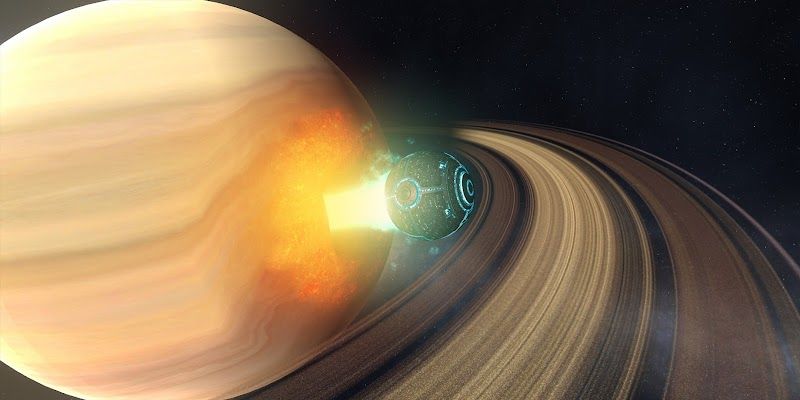
The weapon effects themselves are the game's most dazzling visual accomplishment. The alien tech category includes the UFO fleet, deploying dozens of individual craft that swarm the planet in coordinated attack patterns, each ship firing thin green laser beams that converge on targeted areas and leave glowing scorch marks. The monster category includes things like the giant space shiba - a Shiba Inu dog the size of a moon that literally bites chunks out of planets, leaving cartoonish semicircular gouges before shattered fragments drift away. The celestial weapons invoke huge purple humanoid beings that strike planets with their fists again and again, shaking the planet in waves of shockwave with each blow. They are not pre-recorded cutscenes but real-time simulations that react to your actions; you can stop the action at any point of the destruction, spin the camera, and look at the damage in any angle of your choice.
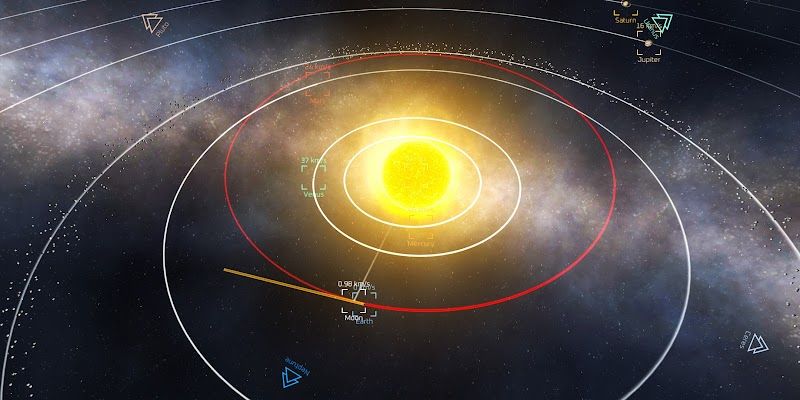
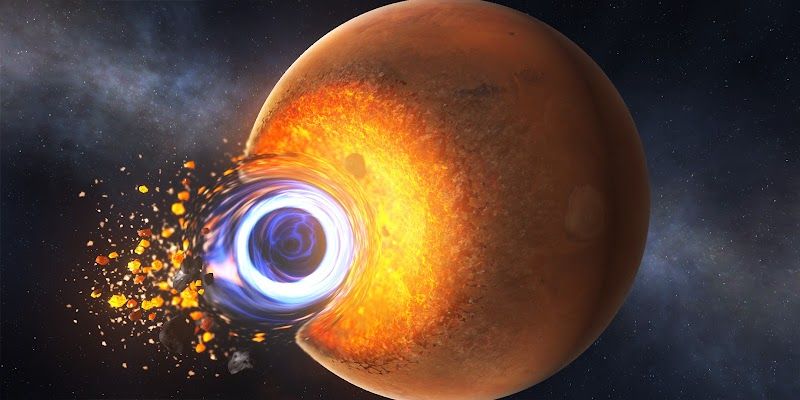
This design, along with its visual-driven motives, has a single unquestionable virtue: it creates the wonder-creating moments, which are rewarding in and of themselves, even though no more traditional gameplay elements have been implemented. In System Smash, watching a black hole slowly devour Jupiter, the gas giant's material stretching out into a blinding accretion disc before disappearing completely, provides a gut-level sense of power and scale. Your satisfaction doesn't come from numerical feedback or score tallies but from having initiated this complex visual event. If you're the kind of player who considers spectacle its own reward, then this approach works perfectly. The graphics aren't supporting the gameplay; they are the gameplay.
Another strength is performance. Considering that it's rendering complex particle systems, planetary destruction physics, and multiple simultaneous weapon effects, Solar Smash runs smoothly on most mobile devices without noticeable lag. This optimization is critical, as any frame drops would immediately break the illusion of physical realism that the visuals work so hard to establish. The fact that a free mobile game can maintain fluid performance while simulating the real-time fragmentation of an entire planet speaks to Paradyme's technical competence.
But visual spectacle as sole gameplay pillar also reveals some major weaknesses. Once the player has seen each and every weapon effect and every possible scenario of destruction, there is nothing left to see or discover. Unlike a strategy game in which mastery deepens over time, or a narrative game in which story provides through-line momentum, the appeal of Solar Smash is thoroughly front-loaded. The fiftieth time you shatter Earth with antimatter bombs looks almost identical to the first, because visual output is all there is. There are no hidden systems to uncover, no techniques to hone, no emergent complexity to probe that isn't projected onto the screen by the graphics engine. Spectacle becomes predictable, and predictability erodes wonder.
By Jerry | Copyright © GameHola - All Rights Reserved














Comments