













Haze Reverb
 Safety


Editor's Review
Haze Reverb attempts to integrate multiple layers of mechanics — narrative-driven transformation lore, tactical squad combat, character progression and customization — into a hybrid anime-RPG/tactical experience. Its foundational design rests on a not-entirely typical structure: sci-fi “Gigantification” mechanics, 9 vs. 9 turn-based battles, and a broad roster system aiming to support varied squad compositions and long-term player choice.
At the core is the lore-mechanic framework: the world has been devastated by extraterrestrial beings known as “Sin,” and human survival requires elite “Drivers.” Through advanced technologies — “Transformation Cores” and “A.V.G (Advanced Vision Gear)” — these Drivers transform into Giantesses, wielding enhanced combat capabilities driven by the protagonist’s “Synesthesia.” This sci-fi rationale grounds not only the story but justifies the game’s mechanics: transformation, enhanced abilities, and the unique identity of characters beyond generic “heroes.”
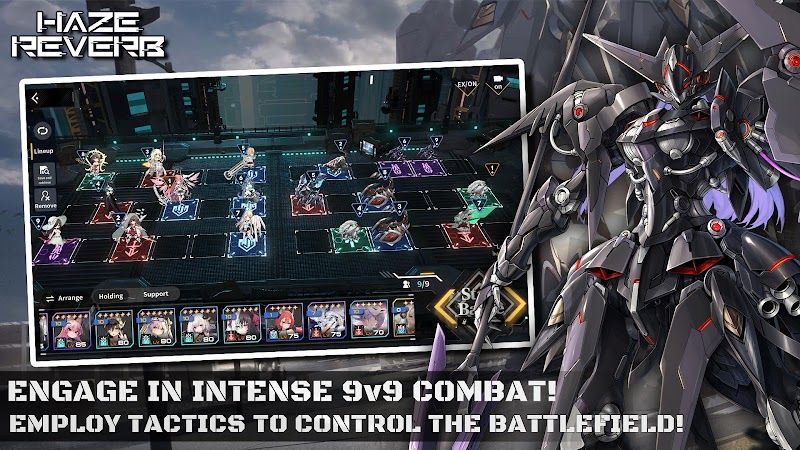
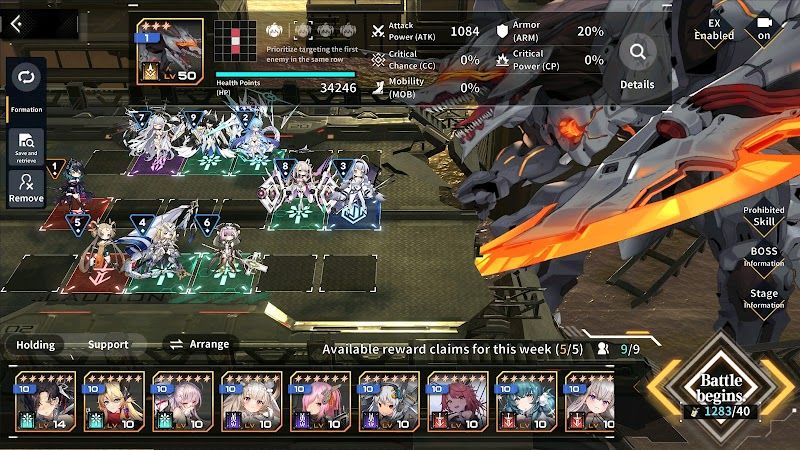
Complementing that is the game’s 9 vs. 9 tactical combat system. Haze Reverb has usage of up to nine units on the field, unlike the conventional 3-5 unit squads in gacha games. This broadens tactical options: the players can theoretically coordinate the front-line defenders, the ranged attackers, and support units at the same time; control positioning, timing of skills, and formation synergies; and respond to various enemy formation or battle situations.
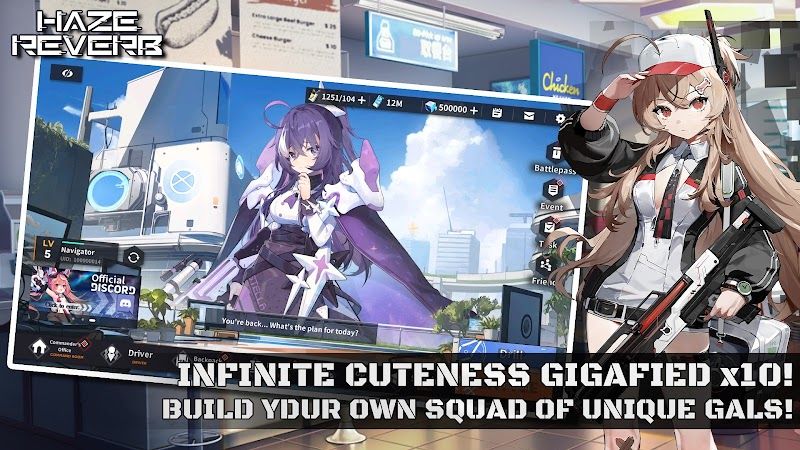
The “Build Your Dream Squad” promise also suggests deep customization: a diverse cast of characters (Giantesses), each with different attributes, abilities, and roles; players can recruit favorites, invest in them, and tailor their squad to preferred strategies. Thus, in design philosophy, Haze Reverb aspires to be more than a shallow gacha RPG — it aims to combine role-playing, tactical strategy, and roster-building depth.
However — and this is where design complexity collides with execution — the actual user experience reveals several structural and usability deficiencies. For many players, the depth promised by the multi-system design becomes obscured by poor clarity and reward imbalance. As per user feedback: there may be a sense of confusion in the mechanics of the game; the roles and specialties of the units (e.g. melee vs. ranged vs. support vs. defense) are not always explained before being deployed, as such, squad building becomes more of a trial and error than a planned strategy.
Besides, despite the theoretically high level of tactical involvement, certain reviews detail actual combat as monotonous, plodding, and in terms of scale and energy lacking the titanic and mecha-girl conceptualization it promises. This mismatch between conceptual promise and mechanical realization undermines the value of the strategic layer.
Character progression and resource systems — another core component — also show cracks. According to community feedback, leveling up or upgrading characters often depends on duplicate pulls (or “reverbs” from duplicates), and converting extras into generic resources or usable upgrades can be inefficient or opaque; players report high resource costs and steep investment-to-reward ratios. For a game that touts squad-building and long-term growth, such inefficiencies can blunt motivation, especially for players who do not heavily invest money.
Moreover, learning curve does not seem to be trivial. The newcomers might fail to comprehend the depth of the systems - transformation lore, combat roles, resource management, and character development, especially when there are little in guidance or very little clarity in the game. This barrier of complexity may dishearten casual or new players to play more deeply thus limiting the available audience regardless of the possible depth.
In summary: Haze Reverb’s system design is ambitious and — on paper — rich. A combination of sci-fi mechanics, tactical squad, and customization provides it with a possibility of attracting who wants a game with much more depth in terms of RPG/strategy elements than a superficial gacha-style grind. Practically, however, a number of design to execution failures, such as role communication, slow combat, ineffective resource systems and high learning curves, erode that potential. For those capable of embracing complexity and tolerating imperfections, Haze Reverb may offer rewarding strategic exploration. For others, the layered systems may feel convoluted or under-delivering.
By Jerry | Copyright © GameHola - All Rights Reserved


















Comments