












Mobile Legends: Bang Bang
 Safety


Editor's Review
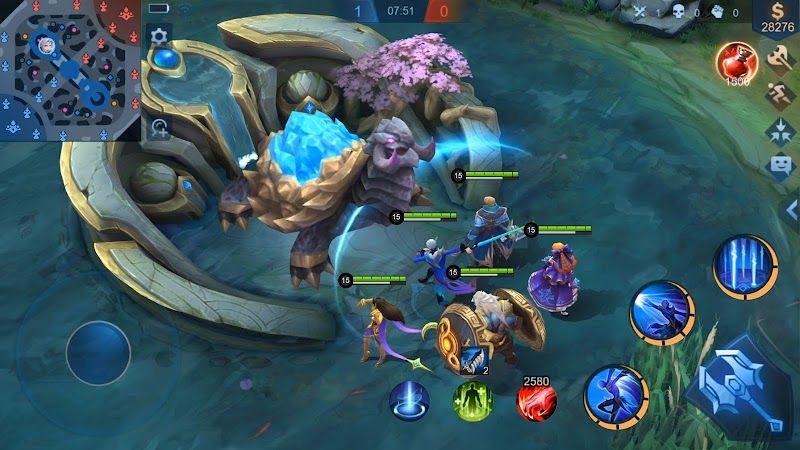
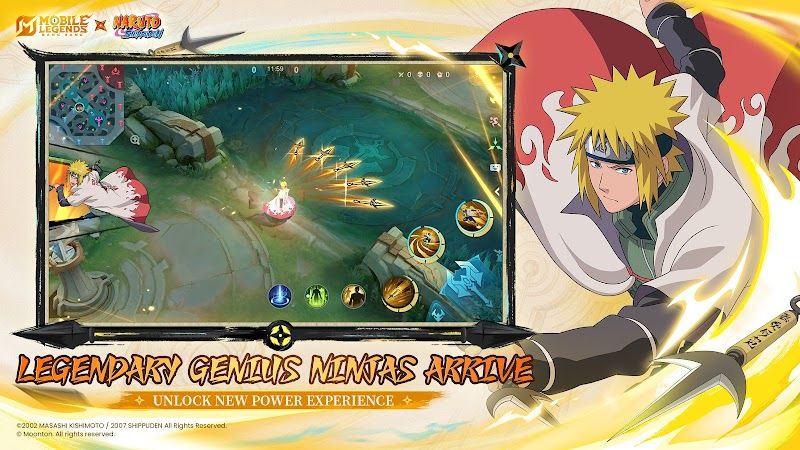
Mobile Legends: Bang Bang provides competitiveness of MOBA, in which two teams with five heroes fight in three lanes, such as Gold Lane, Mid Lane and Experience Lane, which are backed by four jungle quadrants that have buff monsters and farm camps. Although the game is structurally similar to other MOBAs, MOONTON has evolved a unique approach to resource distribution that defines the structure of the team formation and role hierarchy to a core. The Gold Lane Priority system, combined with asymmetric resource allocation mechanics, creates a marksman-centric meta that defines high-level play.
The Gold Lane receives its name from the accelerated minion gold generation in that lane, specifically designed to funnel resources toward the team's marksman carry. Minions in Gold Lane provide approximately 15% more gold than other lanes, ensuring marksmen like Beatrix, Melissa, or Wanwan can reach their expensive core items—including Golden Staff, Demon Hunter Sword, or Malefic Roar—faster than opponents. This design intentionally creates a hypercarry role that becomes exponentially powerful when properly resourced. Complementing this, the adjacent purple buff provides attack speed and true damage, further accelerating marksman scaling.
The jungler receives equivalent priority through exclusive access to Retribution-gated equipment. Only heroes carrying Retribution can purchase jungle items like Raptor Machete or Star Shard, which provide massive stat boosts and unique effects. Junglers also claim both buff monsters—the blue buff granting cooldown reduction and mana regeneration for ability-dependent junglers like Fanny or Ling, and the previously mentioned purple buff. This dual-core economy, where gold and jungle resources are funneled into two hypercarries, distinguishes Mobile Legends from games featuring more egalitarian resource distribution.
The advantages of this system create compelling strategic gameplay. It establishes clear win conditions—teams understand they must protect and enable their carries while enemy teams must shut down opposing carries. This clarity produces focused teamfight dynamics where positioning, peel, and target prioritization become paramount. The system also generates satisfying power fantasy moments; properly farmed marksmen can devastate entire teams during late-game teamfights, rewarding the patience required for the scaling phase.
Role specialization further benefits team coordination. Tanks like Tigreal and Atlas focus exclusively on initiation and protection rather than competing for farm. Support heroes such as Estes or Mathilda can maximize utility without worrying about kill securing. This defined role structure helps newer players understand their responsibilities, creating more organized teamplay even in solo queue environments.
However, this economy system produces significant drawbacks. It creates rigid meta constraints—teams require marksmen and junglers in nearly every composition, limiting strategic experimentation. Attempts to run non-traditional compositions like double-marksman or no-jungler strategies face fundamental resource inefficiencies, as the Gold Lane bonuses and jungle items become underutilized. This inflexibility contrasts with MOBAs offering more adaptable team compositions.
The system also generates role satisfaction disparities. Marksmen and junglers enjoy agency and carry potential, while other roles often feel like support personnel existing solely to enable carries. Tanks and supports, despite requiring equal skill, receive less recognition and face less engaging gameplay loops—spending matches absorbing damage and providing vision rather than making proactive plays.
Furthermore, the dual-core dependency creates vulnerability. If either carry underperforms or gets countered during draft, the entire team suffers disproportionately. Teams cannot redistribute resources effectively mid-match, meaning early carry deaths create snowball effects that other roles cannot compensate for regardless of their individual performance.
In conclusion, Mobile Legends' Gold Lane Priority and role economy system successfully creates focused strategic gameplay with clear carry roles. However, this design philosophy sacrifices compositional flexibility and creates hierarchical role satisfaction that may alienate players who prefer non-carry positions.
By Jerry | Copyright © GameHola - All Rights Reserved

















Comments